
Exploring Cenotes
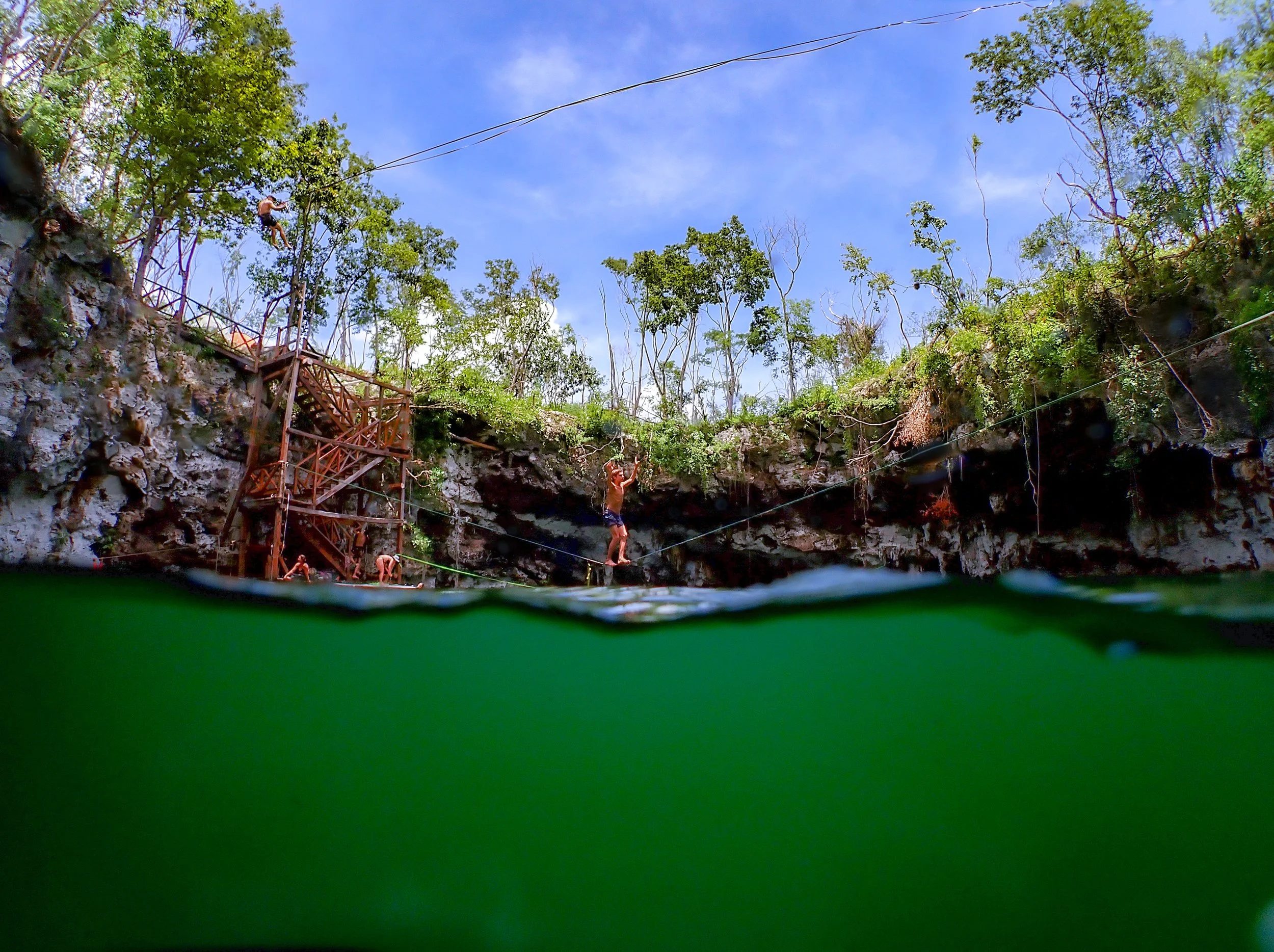
Slack-liners practicing at Cenote Yaakun, Playa del Carmen, México
Cenotes are freshwater sinkholes in Mexico’s Yucatán Peninsula. They’re not only beautiful natural spaces, but also hold historical and cultural significance.
Millions of years ago, the Yucatán Peninsula was underwater among the coral reefs. As sea levels dropped, the fragile limestone ground collapsed, creating rain-filled holes that eventually formed the world’s largest underwater cave system. To the Maya people, cenotes were sacred—they provided water and were seen as gateways to the "inframundo" (underworld). Today, they attract nature-lovers from slackliners, as pictured, to scuba divers. I feel lucky to have dived in these caverns encountering fossilized marine snails, blind fish, and even Mayan pottery and bones!
I took the featured March calendar photo as I tried my new dome lens to get split shots (half over, half underwater).
Fun fact: licking the lens prevents getting water droplets on the photo. I have yet to master that technique… this photo had to be slightly edited to remove water droplets.
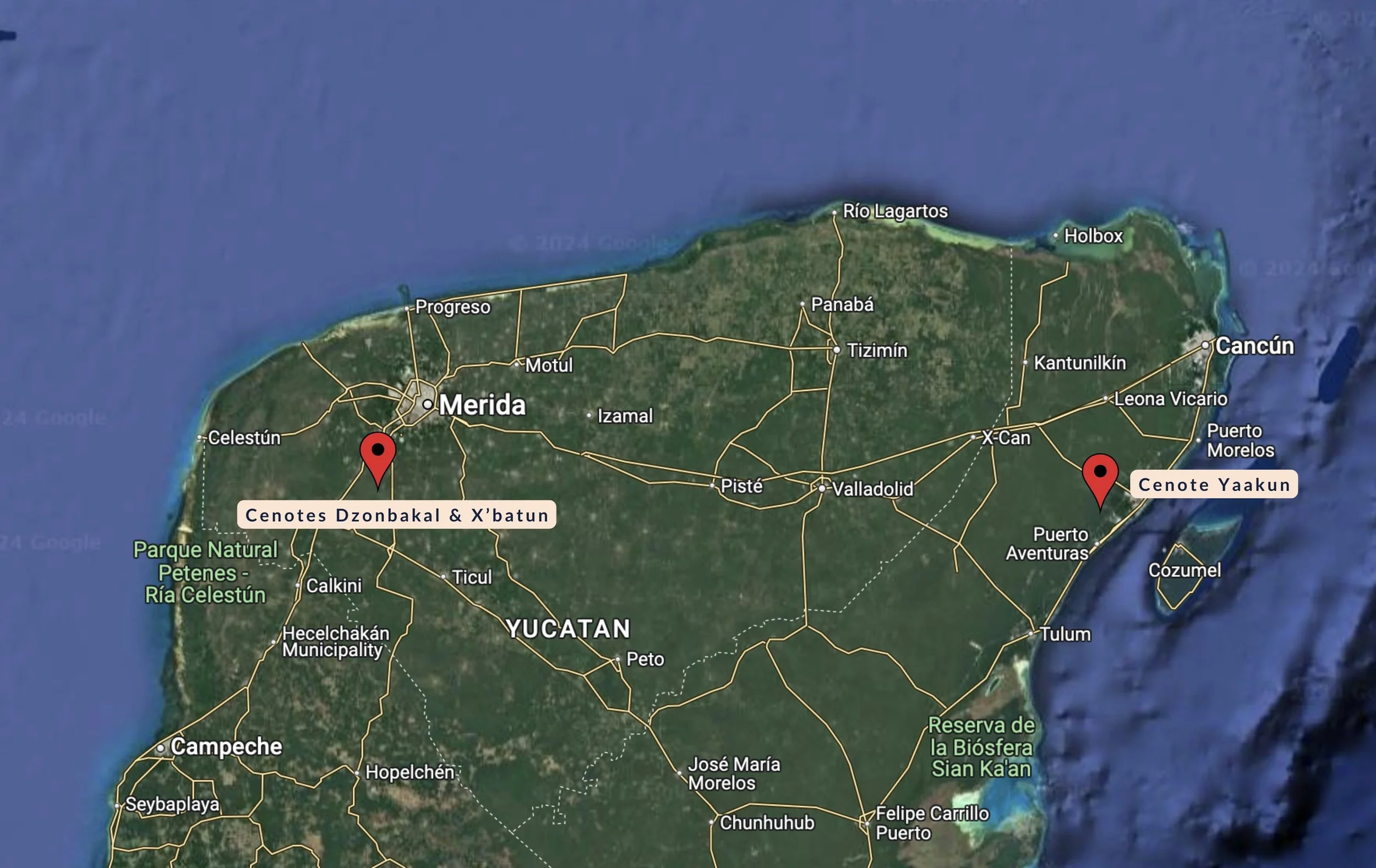
Map of the Yucatán peninsula showing location of Cenotes Dzonbakal, X’batun, and Yaakun
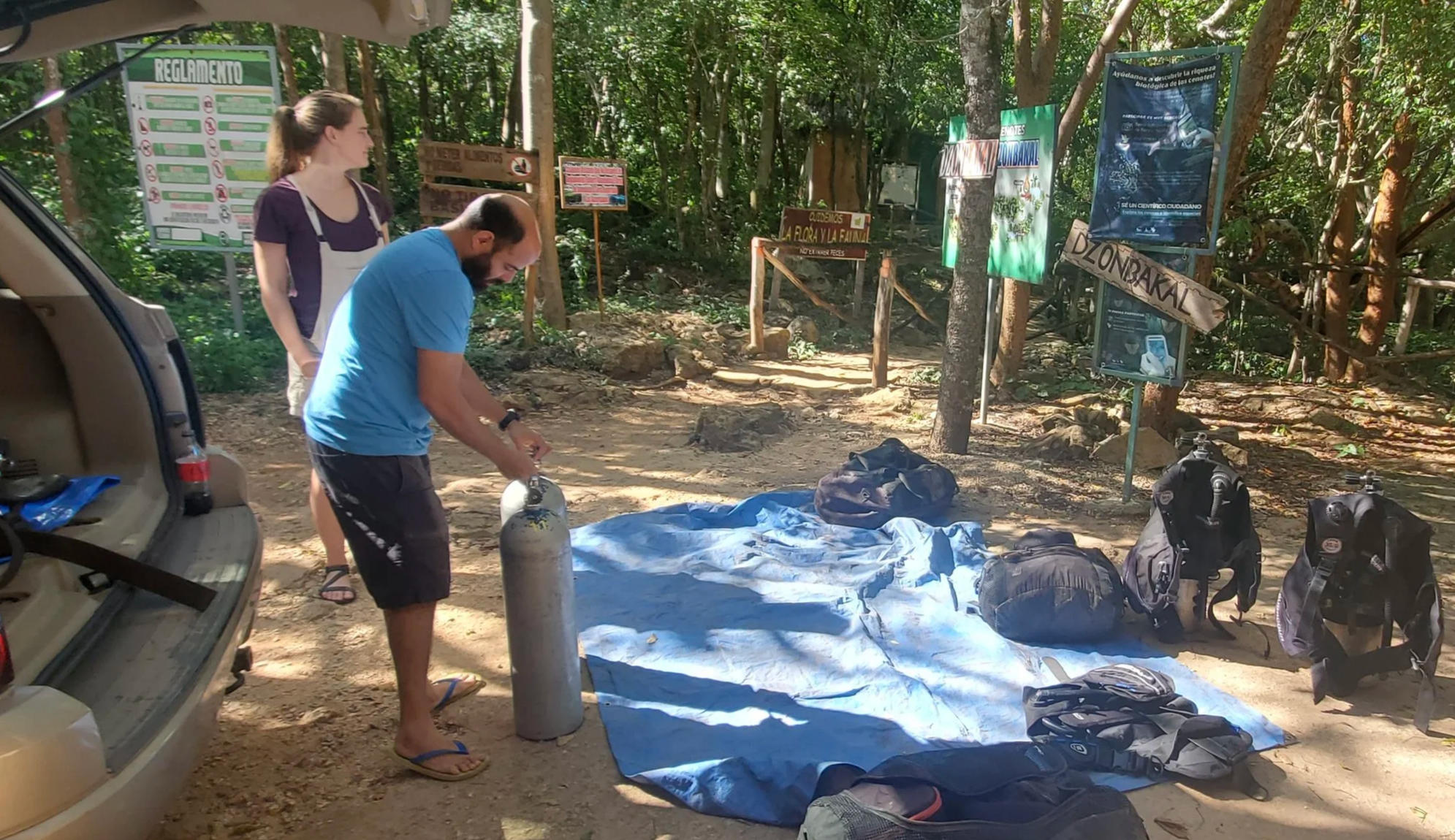
Diving in cenotes usually means driving on dirt roads to arrive at cenotes often managed by local community members, often with mayan decent. Once we arrived we got our scuba gear and tanks set up. Equipment preparation – in my case also including camera gear – is always key prior to a dive. The nerves may be starting at this point, but they are always mixed with excitement. The dive guide explains the cenote layout and the dive plan (how deep we will go, the route we will take, what we can expect to see or experience).
The first dive at cenote Dzonbakal lasted 42 min to a maximum depth of 28.4 m. As we swam away from the cenote entrance, we used our flashlights to guide us around the caverns visiting the known spots where mayan pottery and bones are found. Truly a surreal and eerie adventure!
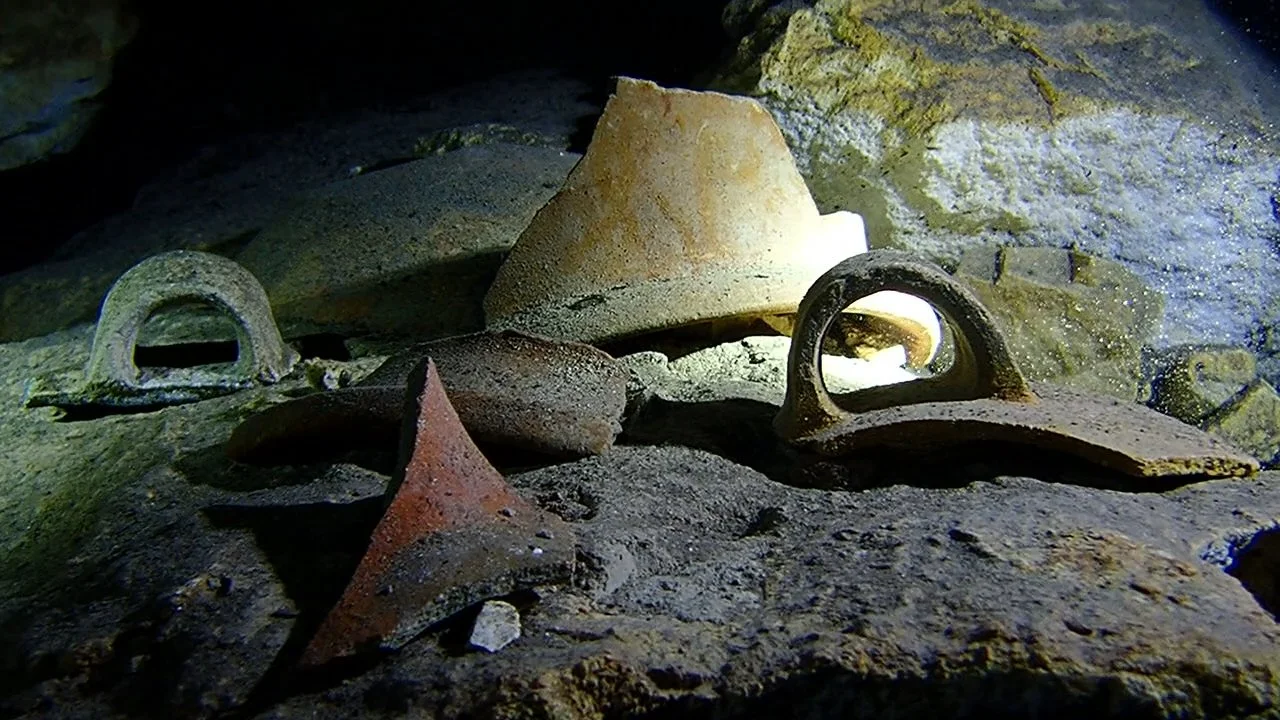
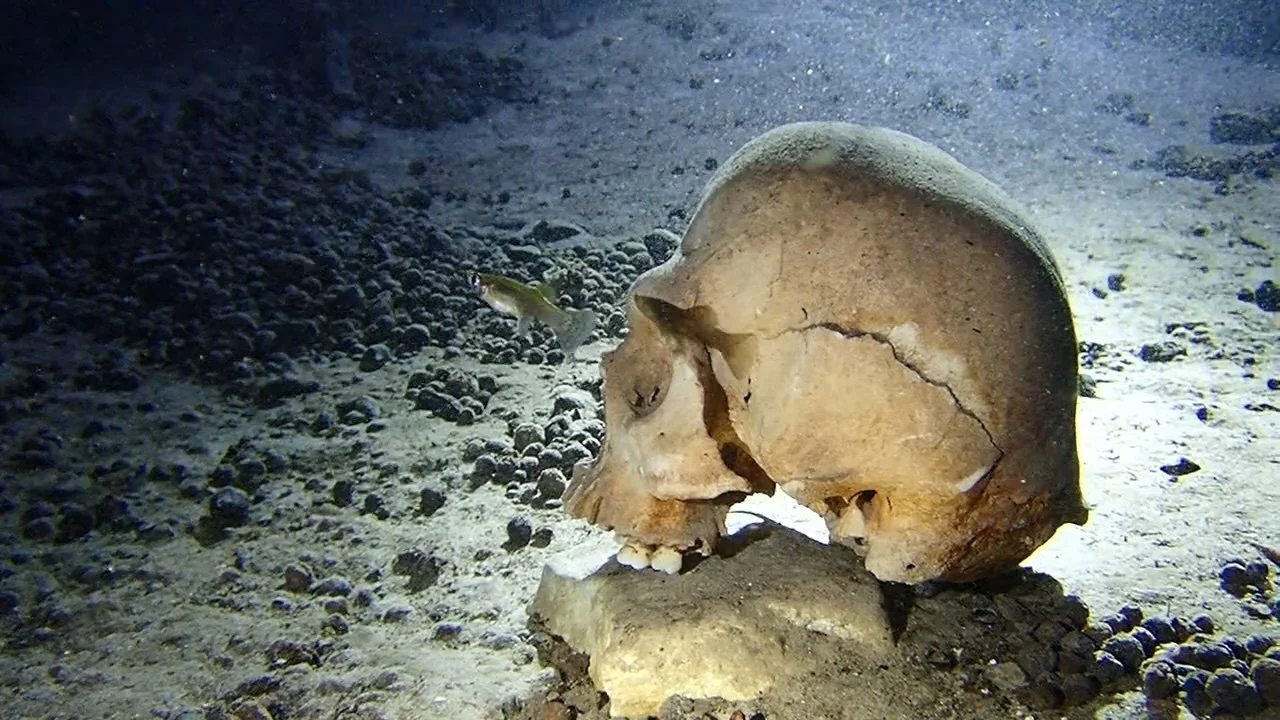
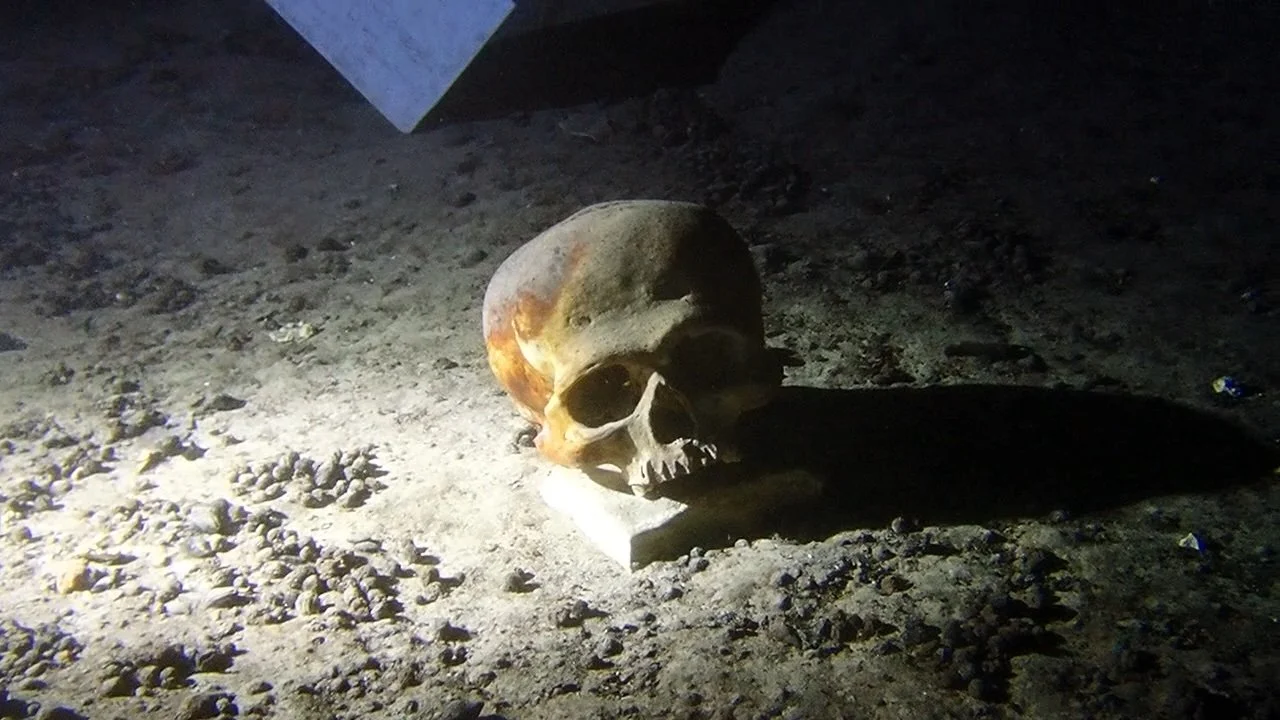
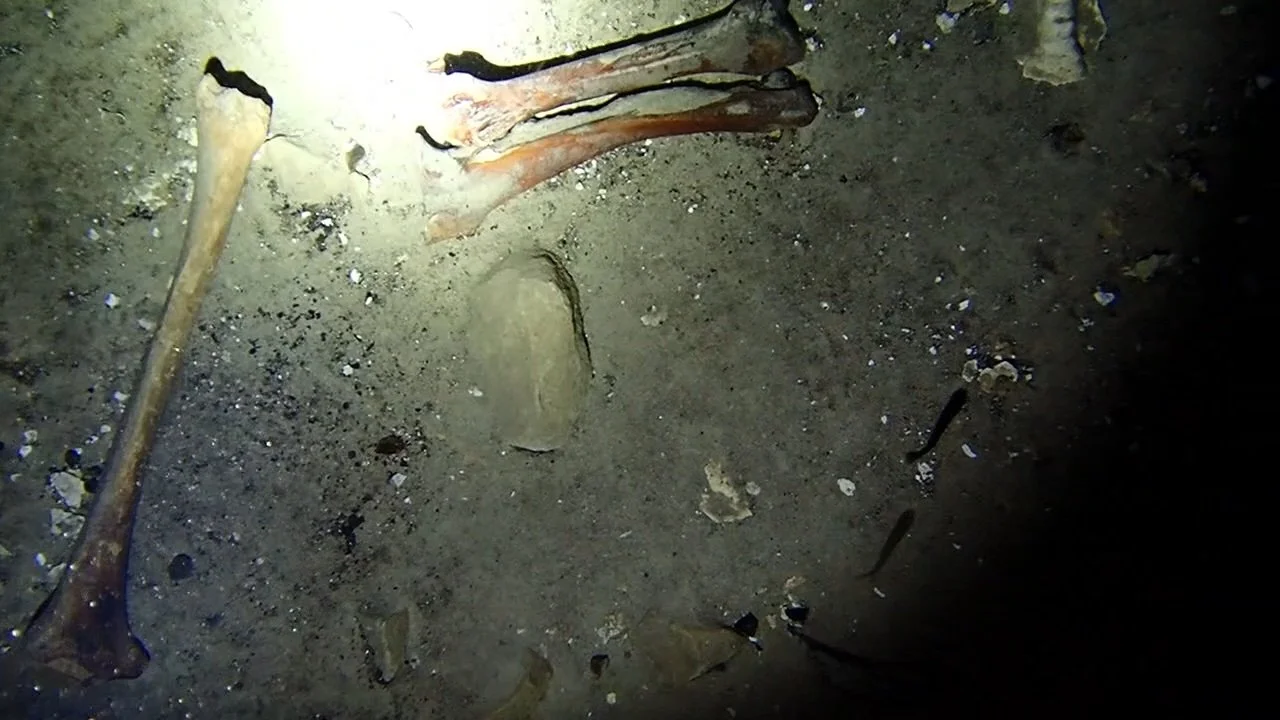
Pieces of mayan pottery, skulls, and bones inside Cenote Dzonbakal
For the second dive, we headed to the nearby cenote X’batun (my favourite), which was covered in beautiful lily pads at the surface before heading down to the huge underwater world. This dive lasted 56 min, and our maximum depth was 36.8 m.
At this depth, many people experience narcosis due to the nitrogen levels in your blood, this produces a feeling of being ‘high’. In my case, I felt even more at awe of the cenote and felt weirdly comfortable in this massive and spiritual underwater world. Our guide made sure we didn’t spend too much time at that depth for safety, and we began to make our way back to the entrance. That’s when I took one of my best photos and cover feature of the 2024 calendars…
You can appreciate the diver bubbles on the rock ceiling, and the rock debris that collapsed on the bottom from when the cenote first formed.
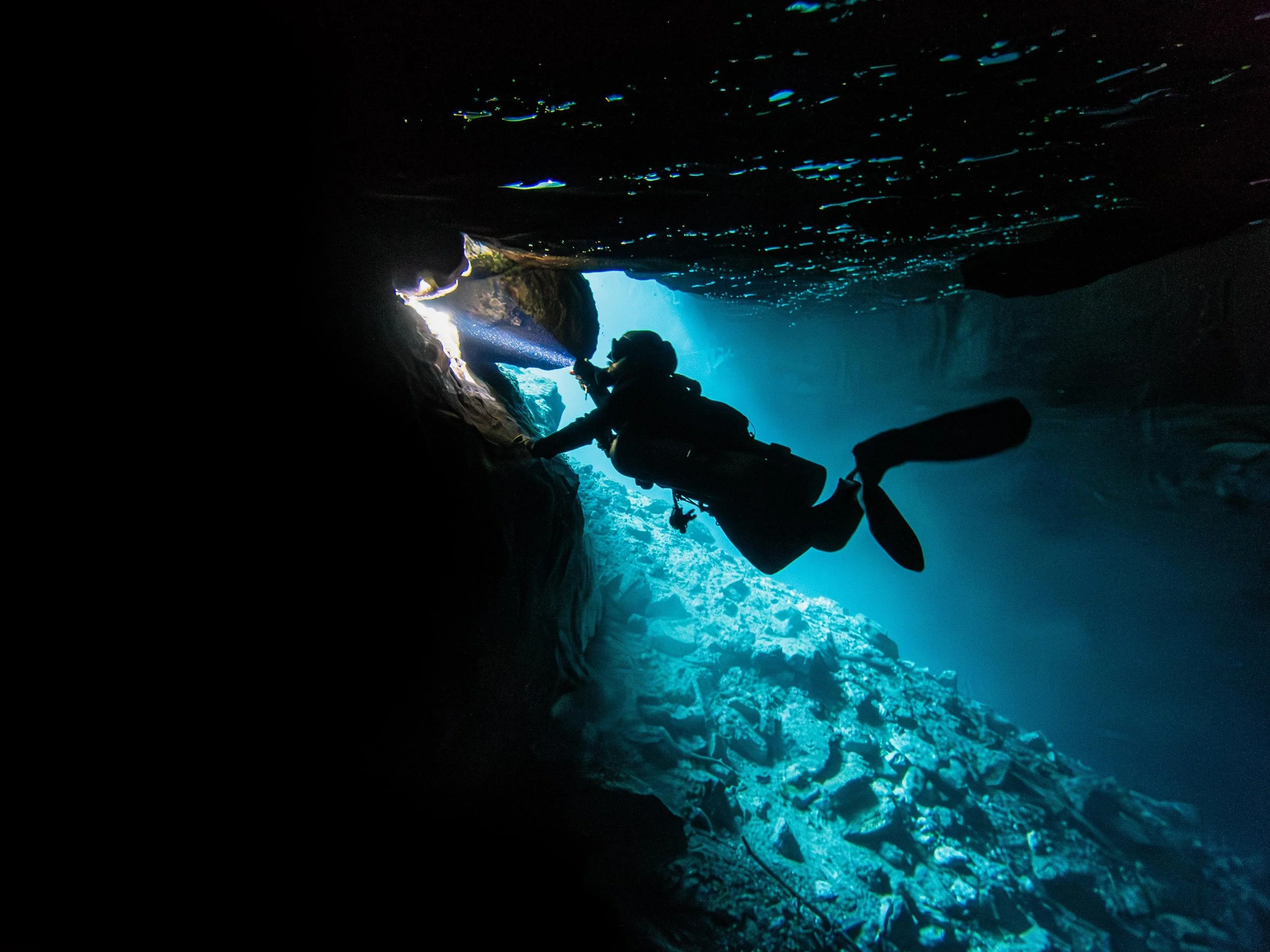
Our dive guide looking into a cenote crevice as we headed back to the entrance to conclude the dive at cenote X’batun.
Often, cenote photos are difficult to take since it is mostly dark underwater, however here, the light coming from the entrance illuminated the surroundings perfectly.
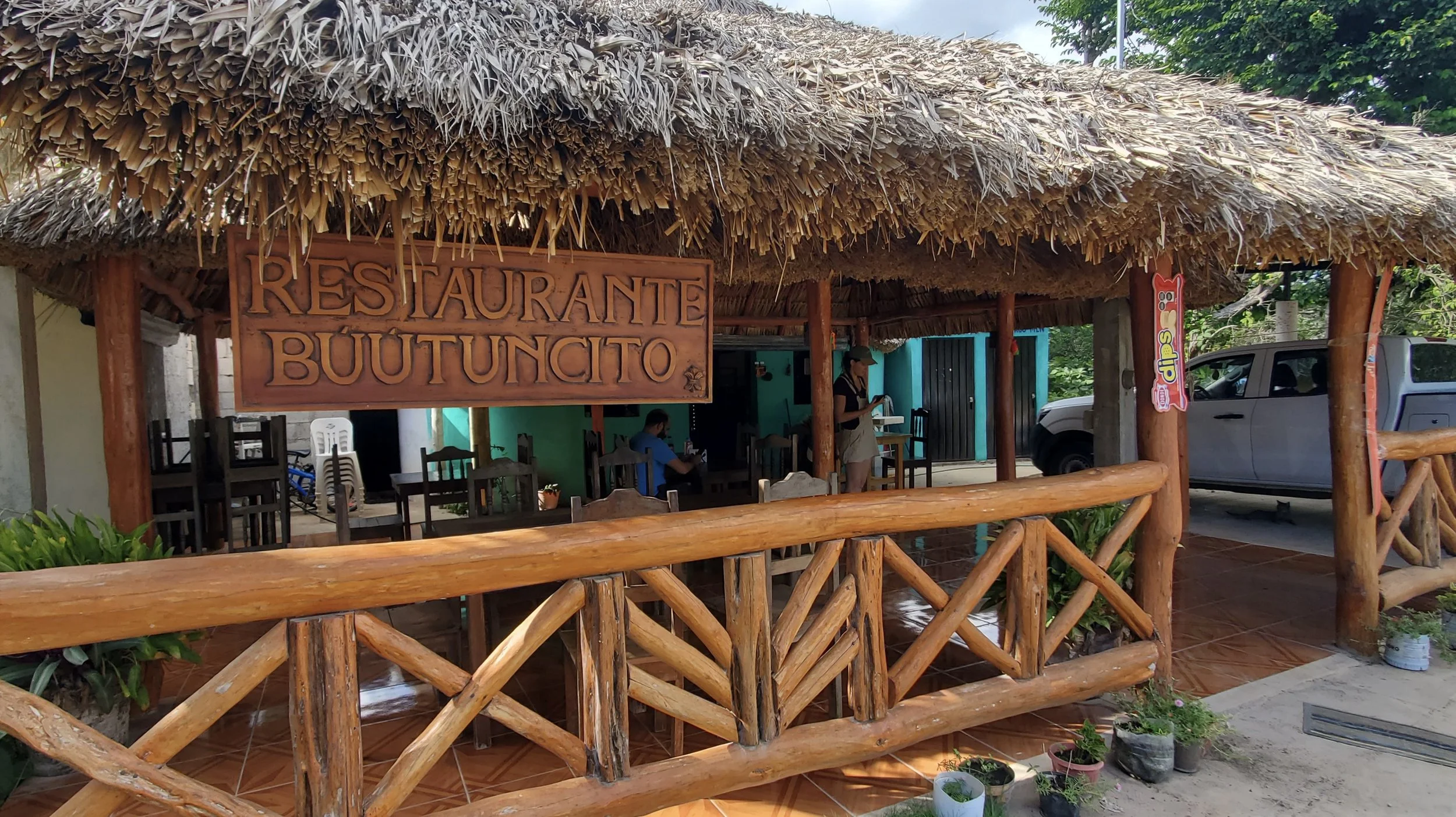
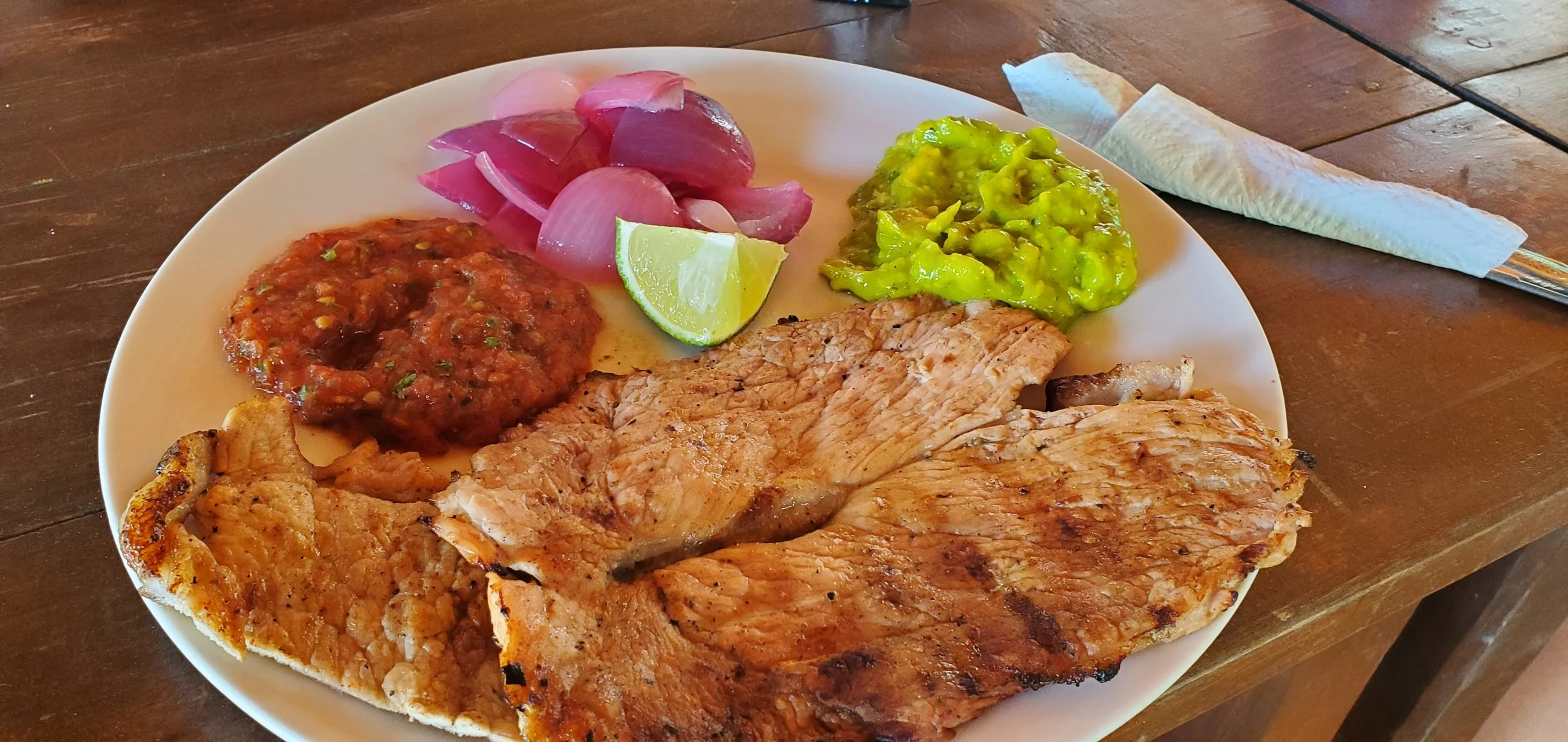
After these two dives, we headed to the nearby Restaurante Búútuncitoto to refuel with traditional delicious food from Yucatán, a Poc Chuc dish – it tasted like heaven.