
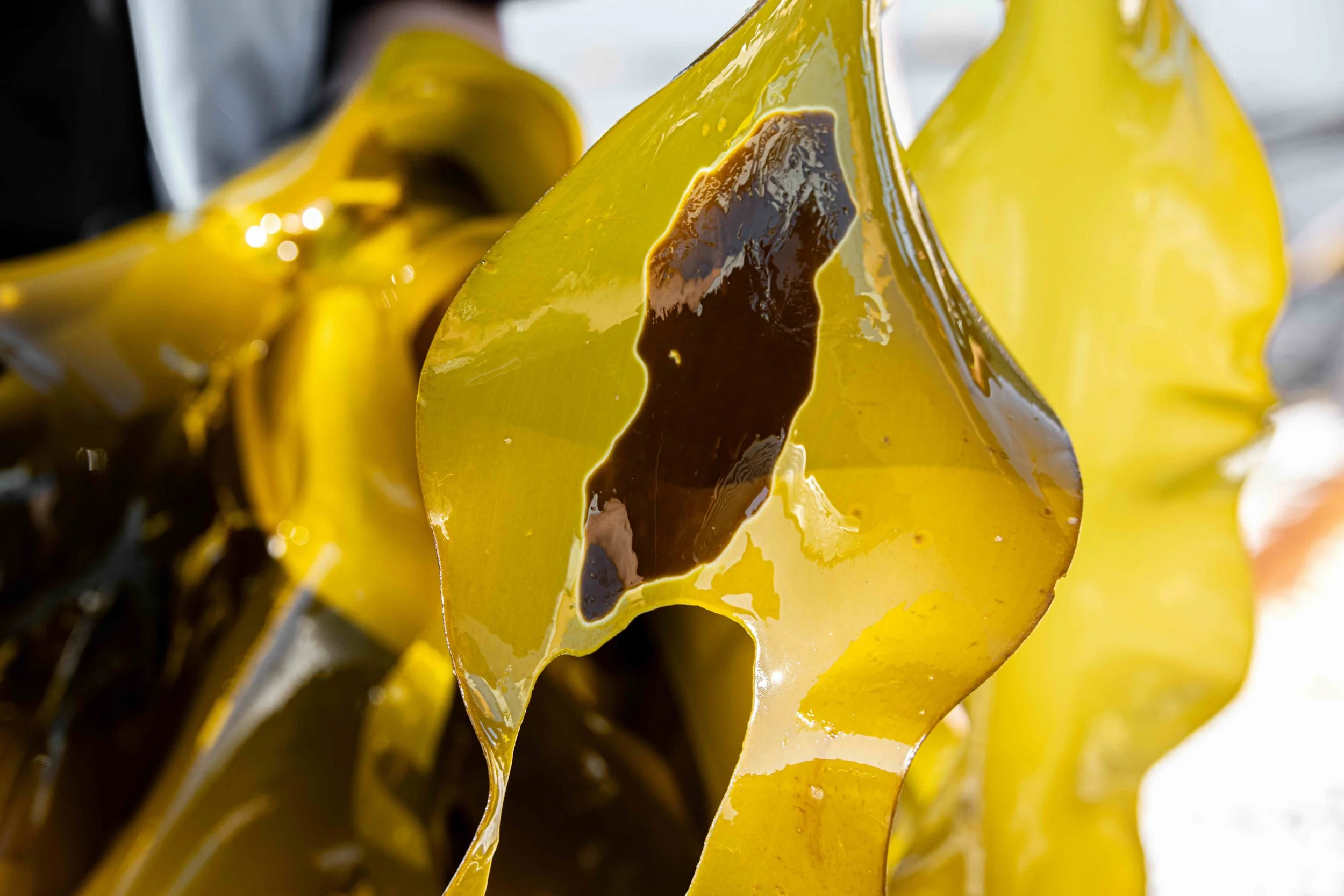
Documenting the True Value of Kelp in B.C.
Conversations with diverse folks working in the kelp sector in British Columbia, Canada.
A visual communication project bringing to life research led by Sarah Gutzmann expressed by visual storyteller Ana Lucía Pozas, supported by Ocean Wise in association with Simon Fraser University and Ocean Nexus, 2026.
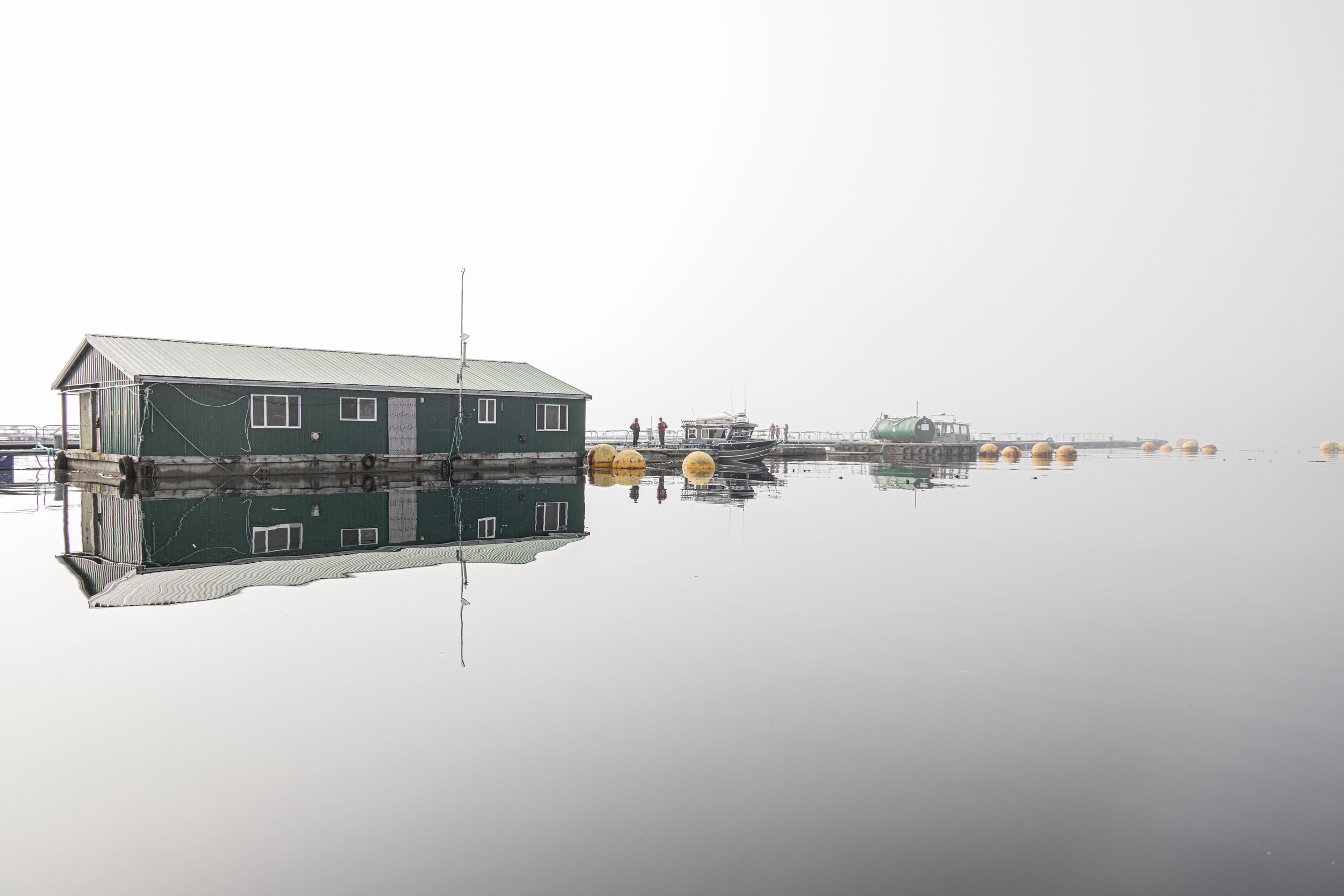
What does it mean to be regenerative? To have a regenerative kelp sector?
At one level, perhaps it is to leave the environment better than we found it; conserving, healing, and re-wilding the ocean while earning a living.
Yet, regenerative development has a central teaching about vitality and viability.
Vitality is the life force, the passion, the drive of a living system.
Viability is made up of the relationships that generate capacity and allow a system to persist through time.
So we asked ourselves: can we make a regenerative system without regenerating ourselves?
Without revitalizing our spirits, passions, and connections with the ocean and to each other? Without accounting for values outside those represented in the market?
In conversation with the individuals featured in this project, we takeaway four main lessons.
Lesson 1
Kelp is foundational — it stewards other species, cultures, ecosystems, and livelihoods.
For Jordon, Wei Wai Kum Coastal Guardian, managing kelp requires respect, reciprocity, and understanding.
“Kelp is the forest of the sea and I think it’s just as simple as that. We look at the coast right now and see all these forestry cut blocks. Forestry is going to happen regardless - we can’t stop it, and I don’t think it’s in anyone’s best interest to – however, we do need significantly better management practices.
But you can look and see there are trees. You can’t do that easily with kelp, so you don’t get the perspective you can get from just looking at this hillside and going, yeah, that’s not doing great. I think the important part is that every bit of kelp forest that recedes is a part of the forest that’s burning away, you just can’t see it.”
Working with kelp means caring for community and can be a way for Wei Wai Kum to reclaim sovereignty.
“There’s no one over hundreds of years that could say that they’ve been a part of a kelp restoration project, so sometimes I do have to stop and tell myself that when [being a Guardian gets] really tough. Even in a relatively small community, you have varied opinions. So, it’s a matter of sometimes going door to door and knocking on each door and saying, hey, what is your opinion on this? Because you checking a box saying yes or no is not good enough for me. I want to know your opinion. I want to know where you stand… and sometimes it’s having conversations with them and saying, hey, how can I help inform you?”
For the Ocean Wise Seaforestation team, working with kelp includes regrowing it in industrialized places. Kelp becomes innovation, novelty, and creative potential.
“There really is nothing like a kelp forest... and to be able to, for my job, go in the water and be a part of it is indescribable.”
Lesson 2
Kelp is a facilitator to re-imagine better practices and more resilient economies.
“[I enjoy] the boots and buckets of it, I think that brings people together... no one’s really figured [kelp restoration] out so it’s exciting just trying to nail down how we make this work, and I like the puzzle aspect.”
“I always wanted a job where I’m helping conserve and protect what I love, which is BC nature. And so, it feels meaningful to be doing something that fits my morals.”
“I like the fast turnaround of the work, too. I think it’s kind of exciting that within a year you can grow the kelp, put it in the water, and now we’re seeing some of the kelp grow. So that’s really exciting on a professional, personal, ecological level. ”
For members of the Seaweed Innovation Hub at North Island College, kelp is amplification. Amplification of kelp itself for aquaculture and restoration, amplification of potential applications, and knowledge amplification to early career scientists.
“There is a lack of awareness. And in business and markets, when there is a lack of awareness, there is then a lack of demand. Now, the interesting thing is that there are a lot of products that we consume here that are made of seaweed, but we don’t know [about them].”
“Locality is often overlooked because people are looking at kelp in the broad sense of ‘look at all the things it does worldwide’, but then you look at this really local level and see everything it does for communities nearby, and I think that that’s a really cool thing.”
Lesson 3
Kelp is a medium for connection to the environment and to others.
“[I value how] important it’s been to people here and how accessible it is. I can just go on the beach right now and pull up a bull kelp and look at it; I think it’s a good way to feel like I’ve reconnected with nature in a way that I feel like a lot of people have lost.”
For the Canadian Pacifico Seaweeds team, kelp brings community. Working with kelp allows them to come together as friends and coworkers to develop something new for a growing sector.
“We need to have the business decisions coming together with scientific reasoning to make an ecological impact [in the sector], and then that will naturally have sustainable social impact, right? So, those pieces are all missing, and it’s just common sense [to connect].”
For Ricky, Discovery Passage Aquarium Manager, kelp helps connect people on land to the ocean.
“If you go into a classroom in town and you ask somebody what their favourite sea animal is, they’re not going to give you “shark” or “whale”, they’re going to say longhorn decorator crab, or opalescent nudibranch, or Pacific white sided-dolphin. They’re very specific because they have a deeper understanding of local biodiversity.When it comes to species that aren’t necessarily visible from the surface, the Discovery Passage Aquarium plays a very important role.”
For visitors, kelp is an invitation to learn and a legacy of kinship.
Lesson 4
Kelp is a role model for adaptability, living with change, and fluid identities.
For Benji, Coastal Adaptation Design Strategist, kelp inspires a way of living and thinking.
“Kelps and seaweeds are really good at showing that there’s an expansive way of existing that transcends being just underwater, being just on dry land, and being just in one space. Seaweed is a role model of a species whose power and strength comes from its ability to adapt through liminality, and I really relate to that being a queer person as it defies a lot of scientific binaries [that western society has].”
“Seaweeds are both incredibly simple and incredibly complex; they take sun and sea water and turn that into life. That ability to connect the sky with the bottom of the ocean is a through line we don’t often see in other species or ecosystems. That ability to transcend biomes and ecological conditions to create life is a beautiful message for connection.”
Conclusion
To all participants, kelp is more than its transactional value. Beyond a job, they all have a certain relationship or reason for choosing to interact with kelp. These values included those of inspiration and connection — vitality and viability.
So, we ask you — what does it mean to be regenerative?
We gratefully acknowledge the contributions of the following people in this project:
Wei Wai Kum Coastal Guardian
Jordon Labbe
North Island College Seaweed Lab
Tylar Neuman
Rhianna Nagel
Logan Zeinert
Naser Arda
Discovery Passage Aquarium
Ricky Belanger
Independent Consulting
Benji Eisenberg
Ocean Wise
Dan Janke
Max Wolf
Canadian Pacifico Seaweeds
Majid Hajibeigy
Luisa Eilers
Nikko Harris
Piero Castillo