
Swimming with Whale Sharks
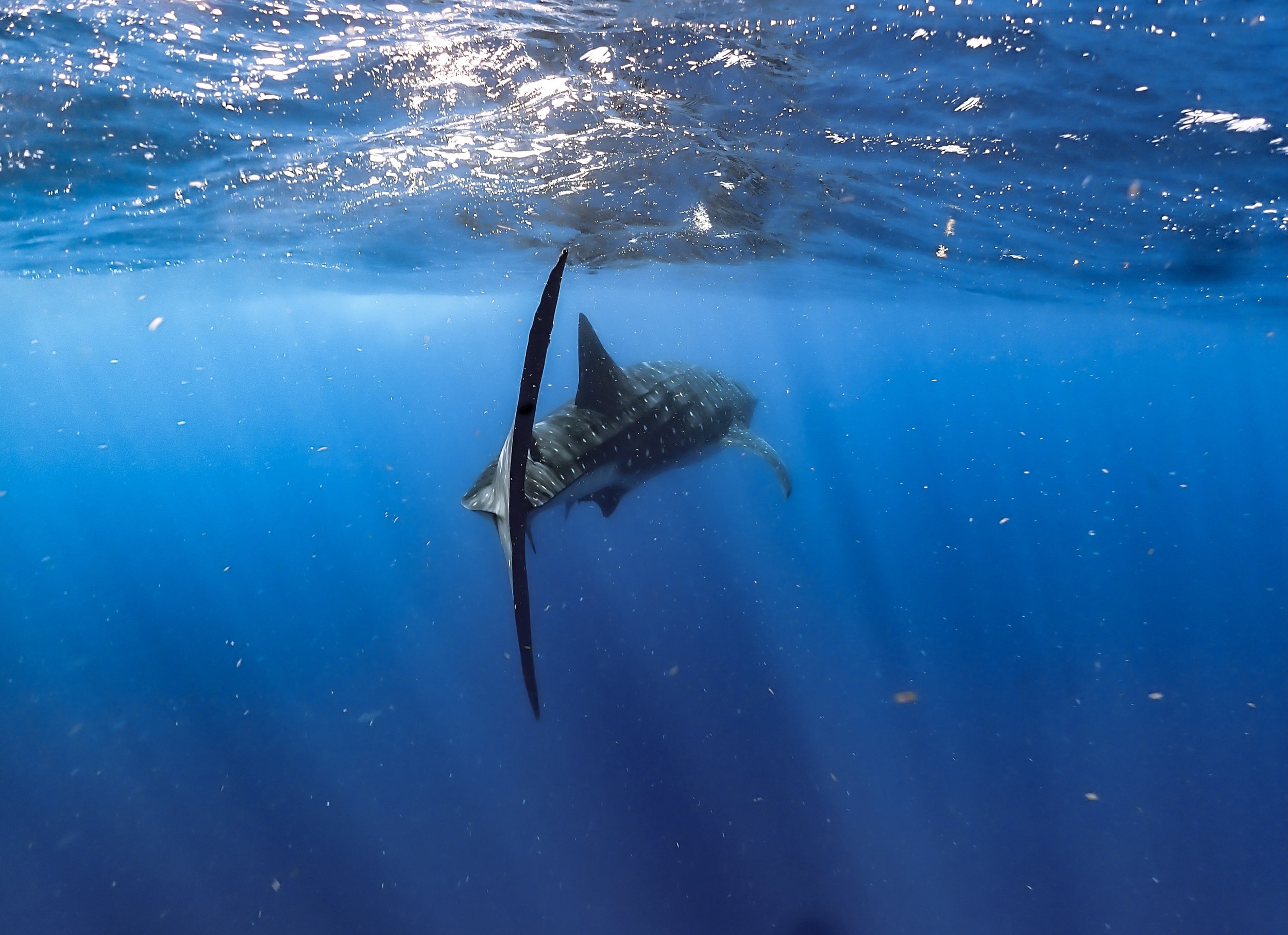
Swimming with a whale shark (Rhincodon typus)—the biggest fish in the ocean—is an undeniably unique experience if done responsibly, and photographing them is no easy task!
The odds were against us on this day; rain from the previous day had pushed the plankton (whale shark food) deeper into the water column meaning the whale sharks were nowhere to be found. We departed from Cancún and headed out into the open ocean. The waves were rough and sea sickness was spreading among our tour boat.
45 minutes went by… we waited patiently…our boat captain noticing we were almost nearing Cuba.
Finally, all of a sudden coming up to the surface for her plankton breakfast was a 12m long female shark—her dorsal fin peeking through the water surface.
It was go time.
I put on my fins and mask, pressed record on my camera, waited for the OK from the captain, and slowly slipped into the water. While battling the strong waves, I tried to keep my hands steady as I pointed my camera towards the approaching whale shark…
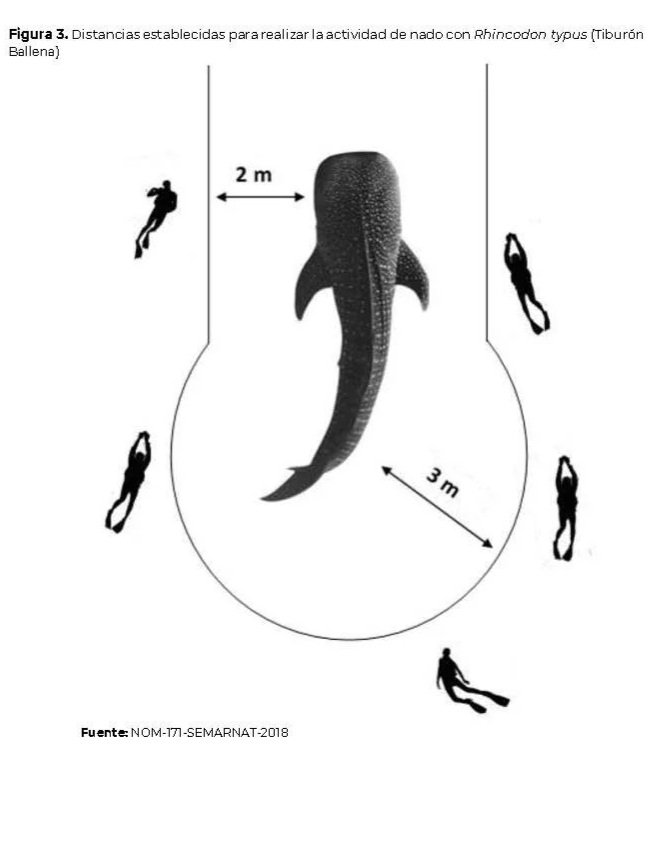
As she approached I positioned myself to swim next to her at a safe distance. Only two people are are allowed to swim with a shark at one time, plus the tour guide. This ensures the shark is not disturbed, and that we do not get in her way.
Whale sharks seem like they move slow, but their huge tail propels them forward at a speed that, in the moment, means you have to swim—fast.
As she swam by, I was lucky to get a photo from up close!
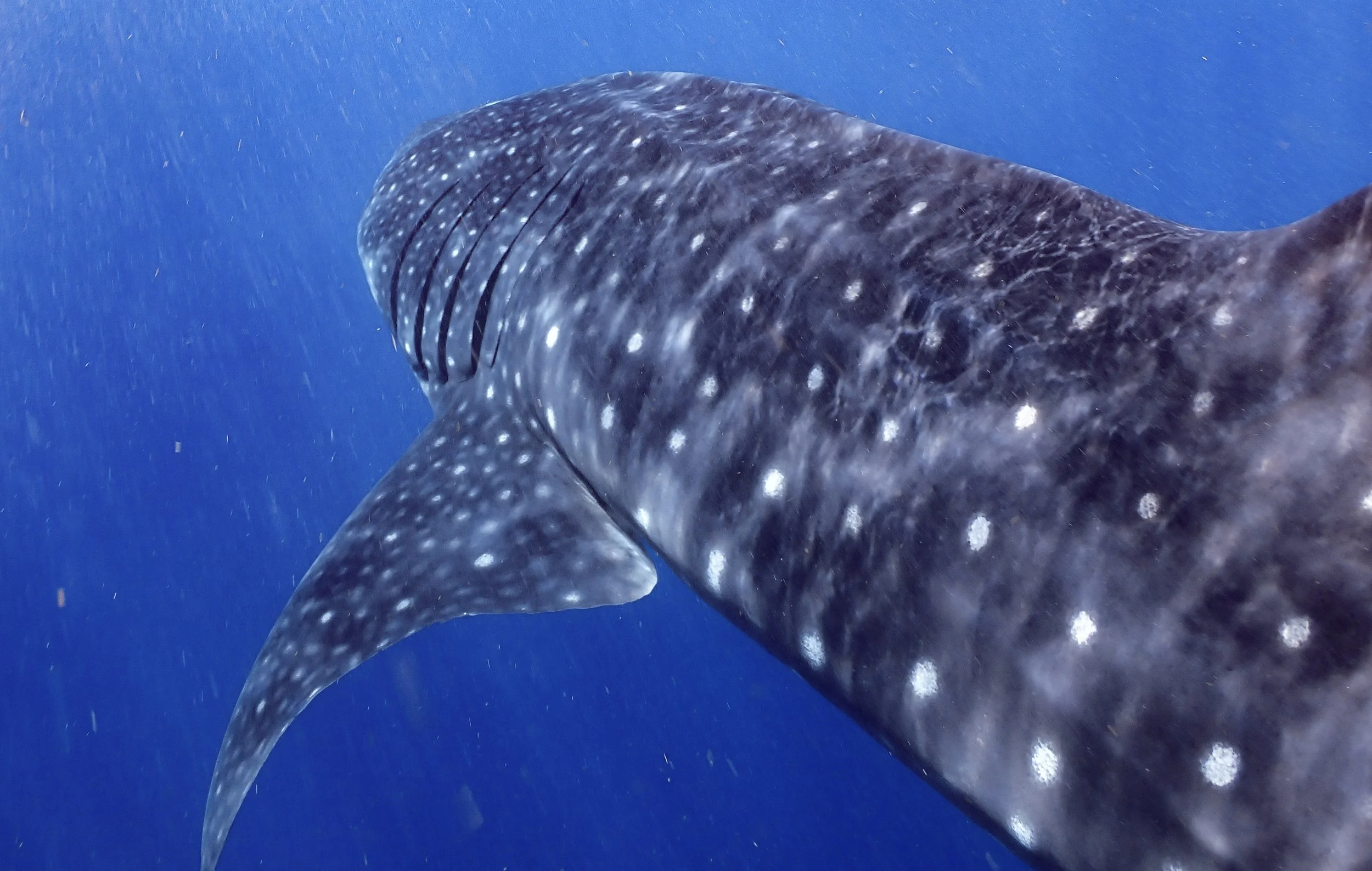
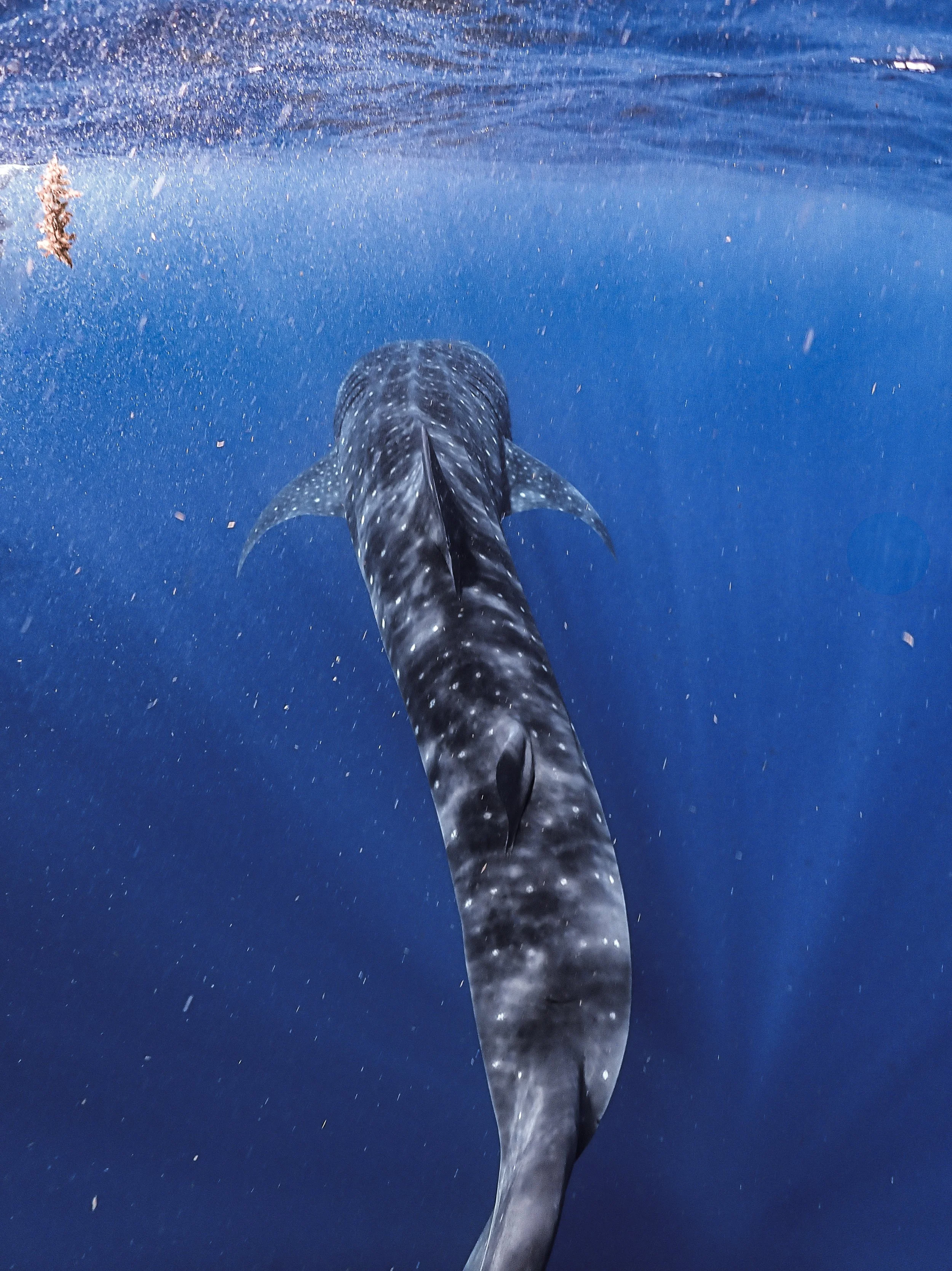
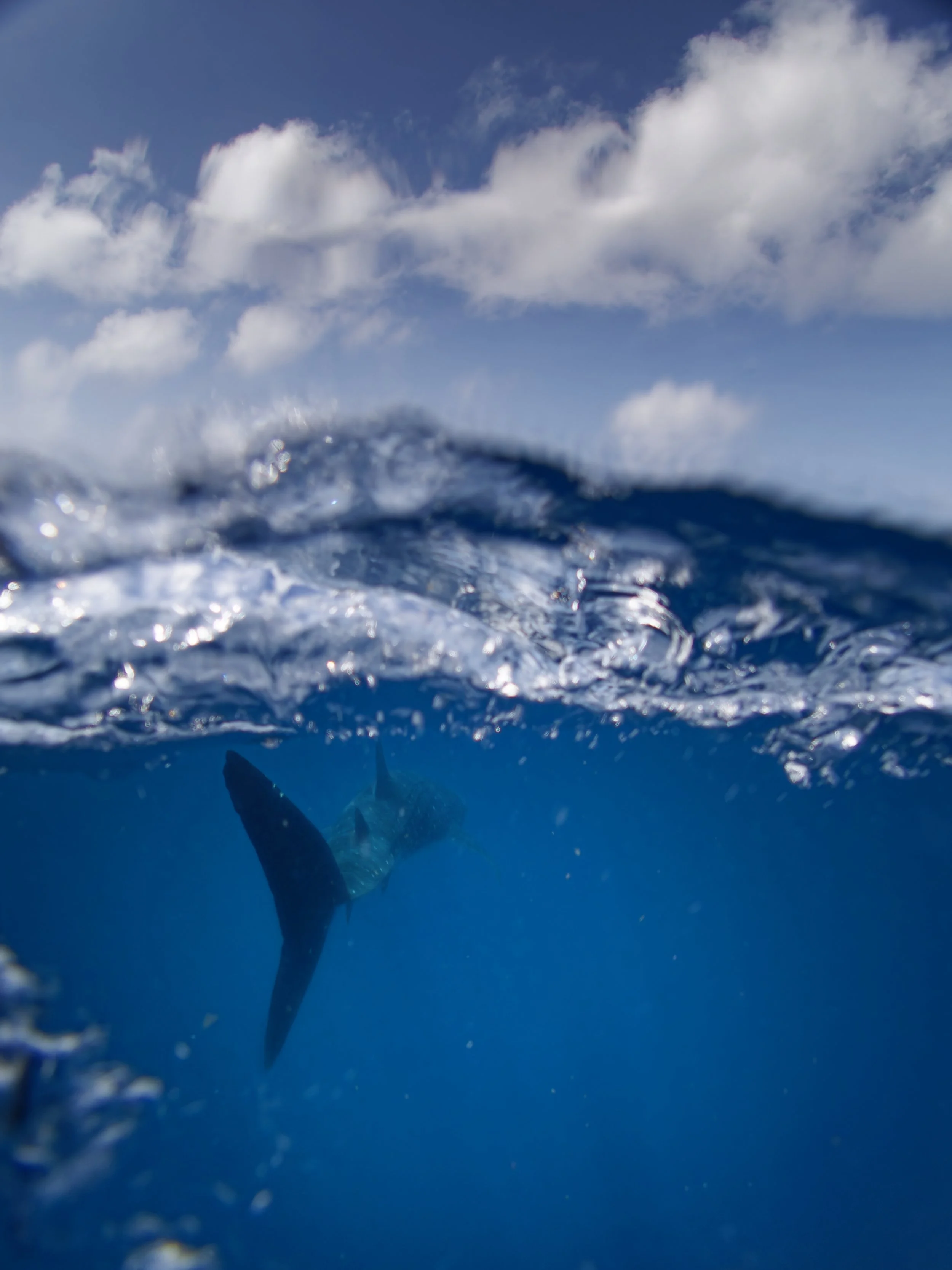
Each whale shark’s pattern is as unique as a human’s fingerprint. Although most well known for their impressive size, their dotted and lined patterns are truly iconic & mesmerizing.
I kept swimming behind her at a safe distance from her tail—usually 3m minimum—knowing I would have a better chance of following her safely and capturing some new angles.
Despite the rough conditions that day, jumping in the water and swimming next to the biggest fish in the ocean makes it all worth it.
Swimming with whale sharks is an incredible activity if done while following responsible ecotourism practices. In Mexico, the 2024 whale shark ecotourism management plan states detailed protocols to carry out this activity safely without putting either the sharks or the tourists at risk.
Check out their distance guidelines.
Always do your research and make sure the tour operators you choose follow guidelines that prioritize whale shark conservation and tourist safety.